

Why Most Micro SaaS Ideas Fail

Why Most Micro SaaS Ideas Fail — and How to Find Real Pain Points

Many micro SaaS ideas fail before they ever reach the market. Almost every failed micro-SaaS story begins the same way – with a “good idea.” It may sound logical, seem useful, and even receive approval from others. But that doesn’t make it viable.

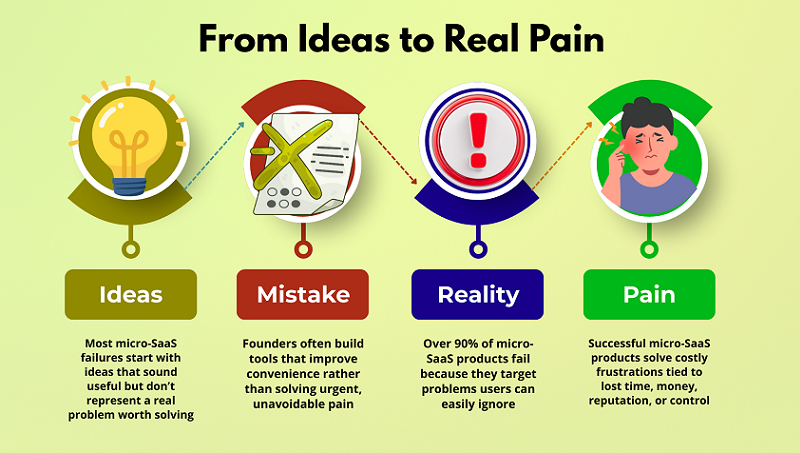
In reality, over 90% of micro-SaaS ideas die not because of competition or poor execution. They die because they didn’t address the pain. Founders often try to solve problems people can easily ignore or optimize processes users have already learned to live with.

The most dangerous trap is when a problem seems obvious but not urgent. Users may agree that “yes, it would be more convenient,” but they’ll never pull out their card to pay for it. And this is where ideas turn into dead products.

Real pain is always associated with losses: time, money, reputation, or control. It can’t be put off. You either solve it or live with it – and hate the process. Micro-SaaS is born precisely in this tension.

In this article, we’ll explore why most ideas seem reasonable but don’t work. We’ll also explore how a problem differs from a pain point in practice, not in theory. And most importantly, how to identify real pain points around which to build a micro-SaaS, not just another experiment.

If you want to stop generating ideas that don’t translate into revenue and start seeing pain where others don’t, read on.
1. Why Most Micro SaaS Ideas Are Built on False Assumptions

Most micro-SaaS projects fail not because of bad code, weak design, or a lack of features. They die much earlier—at the very idea stage. The problem is that many founders build a product on assumptions that have never been tested in reality.

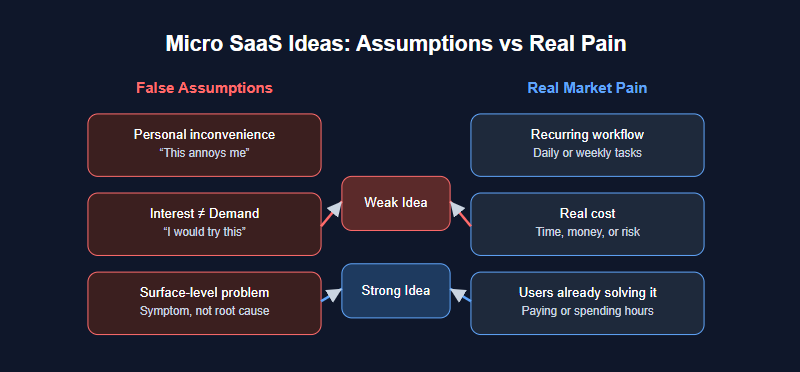
Very often, an idea begins with personal experience. The founder encounters a small, inconvenient problem and assumes that if it bothers them, it must be a problem for everyone. But personal inconvenience is not always a market pain point.

In SaaS, there’s a huge difference between what annoys users and what they’re actually willing to pay for. Most micro-SaaS ideas arise precisely in this zone of illusion.

Another common mistake is to perceive interest as proof of demand. People may say that the product sounds interesting, that the idea seems useful, or that they might try such a tool. But interest is not a demand.

True demand only emerges when users already have a problem they’re either paying money or investing significant time in solving.

Many founders also underestimate the depth of the problem. They see the surface symptom but don’t understand the user’s actual workflow.

For example, if a problem occurs once a month and takes a few minutes to resolve, it will almost never become the foundation of a sustainable SaaS product.

Strong SaaS ideas are built around repeatable processes. These are tasks people perform daily or weekly that directly impact their work, revenue, or efficiency.

When a founder builds a product without understanding these processes, they’re essentially creating a solution to a problem that doesn’t offer sufficient value.

Therefore, the key question before creating a micro-SaaS isn’t “is this idea useful?” but “how painful is the problem it solves?”

It’s the difference between assumptions and actual pain points that determines whether a product becomes a business or remains an experiment.

You can see the same pattern across the broader SaaS ecosystem as well. Many founders assume that building a product around a logical idea is enough, but in reality most startups fail long before they reach product-market fit. If you’re interested in the bigger picture, it’s worth understanding why the vast majority of AI SaaS startups fail and what the successful minority does differently.

Confusing personal inconvenience with real market pain

One of the most common pitfalls for SaaS founders is confusing personal inconvenience with real market pain. When you encounter a small problem in your work, it’s natural to want to solve it with a product.

But just because a problem exists for you doesn’t mean it’s important to the market. Very often, such problems are too specific or too rare. A user may notice an inconvenience, but it doesn’t impact their efficiency, profitability, or core tasks.

In SaaS, pain must have consequences. It must cost the user time, money, or risk.

If a problem has no real value, it almost never turns into a paid product.

It’s also important to understand that personal experience may not be representative. A founder may work in a unique environment, use specific tools, or have unusual processes.

When founders build a product based only on their own experience, it often becomes too niche or simplyunnecessary.

Strong SaaS ideas emerge when many users face the same problem regularly.

Why “I would use this” is a dangerous validation signal

The phrase “I would use this product” sounds like confirmation of an idea. But in practice, it’s one of the weakest validation signals.

People often say a tool seems useful because they want to support the idea or are simply being polite.

But there’s a huge difference between “I would try it” and “I’m willing to pay monthly.”

True validation only begins when the user makes a spending decision.

If someone is already paying for an alternative solution or spending hours on manual work, that’s a much stronger signal than any verbal confirmation.

It’s also important to observe behavior, not just listen to words.

People can claim a problem is important, but then do nothing to solve it.

In SaaS, user behavior is always more important than their opinions.

How surface-level problems mislead founders

Many SaaS ideas are born from superficial observation. The founder sees a problem at the symptom level but doesn’t understand its true cause.

For example, a user complains that reports are difficult to create manually. But the real problem may not be the reports, but rather that the data is stored in different systems.

If the founder only solves a superficial symptom, the product becomes a temporary fix rather than a full-fledged solution.

Such products often appear useful but fail to become mission-critical.

As a result, users may try the tool but see no reason to continue paying for it.

Strong SaaS products solve a fundamental part of the workflow.

They address the source of the problem, not just its manifestation.

That’s why a deep understanding of user processes is key to creating sustainable products.

The Gap Between Annoyance and Willingness to Pay

In the SaaS world, there’s a huge difference between annoyance and genuine pain.

Many problems genuinely irritate users. They can cause inconvenience, slow down work, or simply seem ineffective.

But annoyance doesn’t always translate into effective demand.

For a user to pay, a problem must have a measurable value.

For example, it could take up hours of work, create financial risks, or hinder business growth.

When a problem begins to impact money or productivity, it becomes a real pain.

And it’s precisely these pains that form the basis of successful SaaS products.

Therefore, founders should ask themselves a simple question: how much is this problem worth to the user?

If the answer is close to zero, then the market for the product is likely close to zero as well.
2. The Difference Between a Problem and a Pain Point

One of the most important distinctions in the SaaS world is the difference between a problem and a true pain. Many founders believe that if a problem exists, it can automatically become the basis for a product.

But in reality, most problems are simply ignored.

People constantly encounter inconveniences in their work. They may waste extra minutes, perform manual tasks, or use imperfect tools.

But unless these inconveniences have serious consequences, users rarely seek solutions.

True pain always has a price.

It can manifest itself in lost money, the risk of errors, wasted time, or reduced business efficiency.

When a problem begins to impact one of these factors, it becomes a priority.

And this is precisely when an opportunity for a SaaS product emerges.

Particularly powerful SaaS opportunities arise around recurring pain points.

When a problem begins to weigh heavily on a user, users begin actively seeking ways to solve it.

In such situations, SaaS becomes not just a convenient tool, but an integral part of the work infrastructure.

Understanding this difference helps founders avoid the most dangerous trap—building a product around problems that no one really cares about.

Problems People Tolerate vs. Problems They Urgently Fix

Not all problems are equally important to users.

Some problems are simply tolerated. They may be annoying, but not enough to make them change tools or pay for a solution.

For example, if a task takes an extra five minutes a week, most people will simply accept it as part of their workflow.

But there’s another type of problem—those that users try to fix as quickly as possible.

These could be data errors, lost customers, complex manual processes, or business risks.

These problems create urgency.

And it’s urgency that drives people to seek solutions and pay for them.

In SaaS, the strongest products are always found near such urgent problems.

Why pain always involves cost, risk, or lost time

Real pain almost always involves a measurable loss.

This could be lost time, when employees spend hours performing manual work.

It could be financial loss, when a business misses opportunities or loses customers.

Sometimes it’s a risk—for example, errors that could lead to customer or financial problems.

When a problem touches on one of these factors, it becomes difficult to ignore.

This is why SaaS products that save time or reduce risk often succeed.

They directly impact work efficiency.

And users quickly understand the value of such a solution.

How recurring pain creates SaaS opportunities

The most powerful SaaS ideas arise around recurring problems.

If a task occurs every day, every week, or every month, it becomes part of the workflow.

When users perform a task manually or inefficiently, an opportunity for automation arises.

And it is precisely the automation of recurring processes that underlies many SaaS companies.

The more frequently a problem occurs, the higher the value of its solution.

This creates a sustainable demand for the product.

And that’s why many successful SaaS tools are built around routine tasks.

Why optional problems don’t convert into revenue

Some problems do exist, but they are not required to be solved.

The user can improve the process, but they can also continue to work as before.

These problems are called optional.

They are the ones that most often become a trap for SaaS founders.

The product may seem useful, but users don’t feel sufficiently motivated to pay for it.

As a result, the tool receives a lot of interest but few paying customers.

For SaaS, this is one of the most dangerous scenarios.

Because interest without payment doesn’t translate into business.

3. Where Founders Usually Look for Ideas (and Why It Fails)

Most Micro-SaaS founders begin their search for ideas not from the market, but from inspiration. They read lists of startup ideas, study trends, or search for the “next big opportunity.” At first glance, this seems like a logical approach, as the internet offers countless recommendations, collections, and discussions of promising niches.

However, the problem is that such sources almost never reflect the real pain points of users. They reflect the interests of entrepreneurs, not the real business problems. As a result, many projects are built around ideas that sound interesting but don’t solve a significant problem.

When a founder starts with an idea rather than a market pain point, they’re essentially working blind. They can spend months developing a product that no one will actively use or pay for. This is one of the main reasons why most Micro-SaaS projects fail to achieve sustainable revenue.

True SaaS opportunities are rarely found on public idea lists. They’re usually hidden within people’s daily workflows, inefficient tasks, repetitive operations, and systemic issues.

If you’re unsure where to start looking for these opportunities, it helps to follow a structured approach. One practical resource walks through a step-by-step process for discovering high-quality SaaS ideas and evaluating whether they’re worth building in the first place.

Therefore, it’s important to understand where founders typically look for ideas and why these sources often lead them astray. Below, we’ll look at the most common approaches and their limitations.

Why Trend-Driven Ideas Rarely Survive

Ideas based on trends are very attractive. When a new technology or market begins to grow rapidly, it creates a sense of enormous opportunity. Many entrepreneurs try to build a product around a popular trend, hoping to ride the wave of interest.

However, trends rarely guarantee sustainable demand. They often attract the attention of developers and investors faster than they attract real users. As a result, the market quickly becomes overwhelmed by dozens of similar solutions.

When supply grows faster than demand, most products simply disappear. Users choose a few strong players, and the remaining projects are left without an audience.

Furthermore, a trend in itself doesn’t necessarily indicate a significant pain point. It may be technologically interesting, but it doesn’t necessarily solve a critical business problem.

Therefore, successful Micro-SaaS projects are rarely built around trends. They are built around persistent problems that exist independently of trendy technologies.

Copying Existing SaaS Without Understanding Demand

Many aspiring founders try to copy existing SaaS products. They see a successful service and think, “If this product makes money, I can create something similar.” At first glance, this strategy seems safe.

But copying without understanding the market almost always leads to problems. Successful SaaS typically develops over years and has a deep understanding of its audience. It has a brand, distribution, and user trust.

Simply replicating a product’s features won’t create a competitive advantage. Users won’t switch to a new service without a clear reason.

Furthermore, many successful products solve complex problems within specific niches. Without understanding these nuances, it’s impossible to create a truly useful alternative.

Therefore, copying SaaS can only work when the founder understands a deep pain point for users and sees a significantly better way to solve it.

Idea lists, forums, and “startup inspiration” traps

There are countless lists of startup ideas online. They are published on blogs, forums, and in entrepreneurial communities. These collections often promise dozens of “ready-made” opportunities for creating a SaaS product.

The problem is that most of these ideas have never been tested in the market. They are theoretical assumptions, not the result of analyzing real user problems.

When a founder chooses an idea from such a list, they are essentially starting with a hypothesis without evidence. This means they still have to prove the existence of the problem.

Furthermore, popular idea lists are read by thousands of people. If an idea seems obvious, it has likely already been tried dozens of times.

Therefore, such sources can be useful for inspiration, but they rarely provide a reliable foundation for creating a profitable micro-SaaS.

Why feature gaps aren’t the same as pain gaps

Many entrepreneurs look for opportunities in missing features of existing products. They study SaaS tools and try to find “missing features.”

At first glance, this seems like a good strategy. If a product lacks something, then a solution can be created that adds it.

But in practice, most missing features aren’t real pain points. Users may mention them as wishes, but that doesn’t mean they’re willing to pay for a separate product.

Often, such features simply aren’t a priority for users. They may be convenient, but they’re not critical to their work.

A true SaaS opportunity arises not when a feature is missing, but when there’s a significant problem that prevents people from working effectively.

4. How to Identify Real Pain Points Before Building Anything

One of the most important tasks when creating a Micro-SaaS is to identify real user pain points before development begins. Many founders start coding too early, building a product in the hopes that the market will emerge later.

However, in most cases, this approach leads to a waste of time and resources. Without a clear understanding of the problem, it’s impossible to create a solution that people will pay for.

True SaaS opportunities become apparent when a founder begins to closely study user behavior. People constantly encounter tasks that take too much time, create risks, or require complex processes.

These problems are rarely described directly. Users don’t always formulate them as “an idea for a SaaS.” But they can be detected through repetitive actions, workarounds, and inefficient processes.

Therefore, instead of asking people “what product do they need,” it’s much more useful to observe how they actually do their work.

You can often uncover the most promising opportunities for Micro-SaaS by examining these details.

Observing workflows instead of asking for ideas

One of the best ways to uncover real pain is to observe people’s workflows. Many problems only become apparent when you observe how people perform tasks in practice.

For example, users may use multiple tools, copy data between systems, or perform the same operation dozens of times a day. These processes create friction and waste time.

When people regularly perform such actions, they create a potential opportunity for a SaaS solution.

It’s important to understand that users rarely identify such problems themselves. For them, it’s just part of the job.

But for a Micro-SaaS founder, these very same repetitive processes can become the basis for a new product.

Signals that indicate people are already paying to solve the problem

One of the strongest signals of real pain is when people are already paying to solve the problem. This could be through existing tools, services, or manual work by specialists.

If companies spend money to solve a problem, it means the problem has economic value.

Even if existing solutions are imperfect, the very fact of paying demonstrates that a market exists.

Sometimes users combine several tools to solve a single problem. This can also be a sign of unmet demand.

For micro-SaaS, this means the opportunity to create a simpler, more convenient, or more specialized solution.

How to spot pain through behavior, not opinions

User opinions can be useful, but they don’t always reflect reality. People often say they need something but aren’t willing to pay for it.

Therefore, analyzing behavior is much more important. What tasks do users perform most often? Where do they spend the most time?

Behavior reveals real priorities.If users repeatedly perform a task manually or rely on complex processes, it often indicates a problem.

It’s also worth paying attention to workarounds. When people create their own scripts, spreadsheets, or internal tools, this is a sign of an existing pain point.

Such observations often provide a more accurate picture than any survey.

Questions that Reveal Urgency Instead of Curiosity

When founders communicate with potential users, it’s important to ask the right questions. Many questions merely arouse curiosity but don’t reveal the true urgency of the problem.

For example, asking “Would you use this product?” rarely yields a useful answer. People tend to answer positively out of politeness or curiosity.

It’s much more useful to ask about current processes. For example, how the problem is currently being solved, how long it takes, and what problems arise.

It’s also important to find out what consequences arise if the problem isn’t solved in a timely manner.

Answers to such questions help understand how important the problem truly is to users.

5. Turning Pain Points Into Viable Micro SaaS Ideas

After understanding the real pain points of users, you can transform them into viable Micro SaaS ideas. Many entrepreneurs make a mistake at this stage, trying to create an overly complex product or solve too broad a range of problems.

However, successful Micro SaaS solutions usually start with a narrow problem. They focus on a specific audience and a specific situation.

This approach allows for faster product development, hypothesis validation, and first user acquisition.

It’s important to understand that the goal at this early stage isn’t to create a perfect product. The goal is to ensure that the problem is truly significant enough for people to start using and paying for the solution.

Once you validate the market pain point, you can gradually expand and improve the product.

Therefore, turning a pain point into a SaaS idea is a process of simplification, focus, and hypothesis validation.

Narrowing pain to a specific user and moment

A strong SaaS idea almost always targets a specific user and a specific moment in their workflow. The more precisely you define the situation, the easier it becomes to create an effective solution.

For example, instead of a general idea like “marketing tool,” you can focus on a single task within the marketing process.

When you clearly define the problem, it becomes easier to understand user needs.

This also simplifies product development and value communication.

A narrow focus is often key to a successful Micro-SaaS launch.

Validating pain without pitching a solution

During the idea validation phase, it’s important not to sell the solution too early. If you pitch a product right away, users may respond to the idea itself, not the problem.

It’s much more useful to first understand the severity of the pain itself.

The founder can ask questions about current processes, problems, and implications.

If users are actively discussing their challenges and looking for solutions, that’s a good sign.

Confirm the pain first, and only then move to discussing possible solutions.

Mapping pain to a simple, focused product

Once you confirm the problem, the next step is to identify a minimal solution.

A micro-SaaS product shouldn’t solve everything at once. Instead, it should address one specific need as effectively as possible.

A simple product is easier to develop, test, and improve.

It also reaches the market faster and begins to receive feedback.

Over time, such a product can become the basis for a larger platform.

Knowing when the pain is strong enough to build

Not every problem is worth building a SaaS product. Sometimes the pain exists, but it’s not strong enough for people to pay for a solution.

Therefore, it’s important to evaluate several factors: the frequency of the problem, its impact on work, and users’ willingness to pay.

If the problem occurs regularly and impacts business performance, the likelihood of a successful product is significantly higher.

It’s also important to consider existing solutions. If the market is already paying for similar tools, this confirms demand.

When all these signals coincide, you can confidently move on to creating a Micro-SaaS.

Final Thoughts — Micro SaaS Success Starts With Pain, Not Ideas

Most Micro SaaS projects fail not because the technology was bad or the product was of insufficient quality. The root cause is usually much simpler: the product solved a problem that wasn’t truly important enough for users. Many founders start with an idea, inspiration, or trend, rather than addressing a real market pain point.

However, successful Micro SaaS companies almost always emerge from a deep understanding of user problems. They don’t start with a list of features or innovative technologies. They begin with observing where people are wasting time, money, or efficiency.

True opportunities arise when a problem recurs regularly and has real business implications. In such situations, users don’t just want a solution—they actively search for a way to remove the pain. This is where the opportunity for a new SaaS product emerges.

Finding such opportunities requires a different mindset. Instead of searching for ideas, an entrepreneur needs to study people’s workflows, analyze their behavior, and identify inefficiencies. This is often where the best opportunities for creating Micro SaaS lie.

It’s also important to remember that not every problem turns into a profitable product. A strong SaaS idea typically combines several factors: a common pain point, tangible impacts, and users’ willingness to pay for the solution. When these elements align, the likelihood of a successful product increases significantly.

Therefore, the main principle of Micro SaaS can be formulated very simply: pain first, product second. By starting with a problem rather than an idea, the chances of building a useful and profitable service become significantly higher.
how-to-scale-a-saas-business

How to Scale a SaaS Business: Step-by-Step Guide to 10 – 50 Paid Users

How to scale a SaaS business from zero to 10–50 paying users isn’t about growth hacks or complex automation. What matters most is putting your product in front of the right audience early, so they clearly understand its value and functionality.

It’s been noted that many new micro SaaS projects fail not because they’re ineffective, but because their launch was initially poorly coordinated. Founders build the product and then think they’ll find paying users, wasting time without feedback or initial profit.

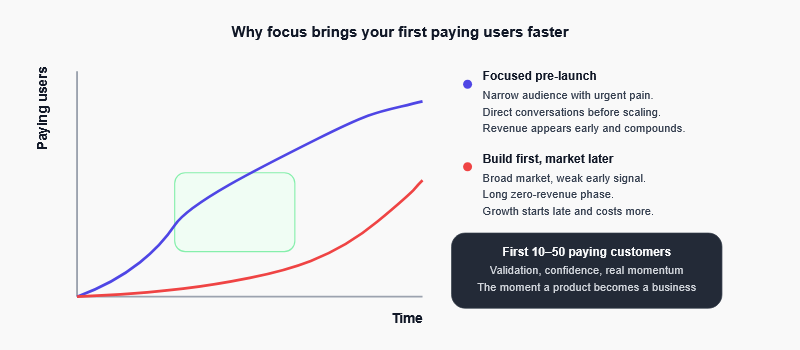
The fastest path to first sales begins even before development is complete. A smart pre-launch strategy allows you to capture demand, test willingness to pay, and build momentum before release.

This guide describes steps to quickly get your first 10-50 paying customers. Each approach is designed for working with limited resources and minimal automation.

You’ll learn how to attract users with high purchase intent, convert them at the start, and turn early demand into scalable growth. The goal here isn’t growth at any cost, but rather building a business with rapid momentum from the very beginning.

1. Start with a Narrow Audience with High Purchase Intent

The biggest mistake founders make is trying to please everyone at the start. Don’t focus on a mass audience, as it requires large budgets, a long decision-making cycle, and complex marketing.

Always focus on a narrow target group that already has a pain point and needs a solution right now. That’s how you’ll get your first 10-50 paying users.

a) Formulate an Urgent Problem

When you go to the pharmacy and buy a medicine, you’re actually paying not for the product but for the opportunity to relieve pain. It’s exactly the same in the world of SaaS products. The user wants to eliminate their pain. You need to identify the user’s problem—one that they regularly face, one that’s already being solved with spreadsheets, hacks, or manual labor, and one that impacts their money, time, and reputation. The urgency of the user’s problem is key to driving quick sales. If you’re unsure how to consistently find urgent, high-value problems like this, start with Day 1 — Where to Find Great SaaS Ideas (and how to vet them). It walks through a practical framework for spotting real SaaS opportunities and validating them before building anything.

b) Choose a Niche that You can Reach Manually

When launching your micro SaaS, it’s important to select an audience you can reach in person, via email, private message, or through niche communities like Reddit, LinkedIn, and Discord. This immediate, direct contact will allow you to quickly understand needs, refine your product, and close your first sales without complex marketing.

c) Confirm Demand Through Conversations

Personal contact with users is the best way to understand their problem and provide them with a solution. If they have a product but aren’t satisfied with it, find out what you can do to make them happy. Gently offer early access to your SaaS product. If people are willing to discuss pricing and ask probing questions about your product, you’re on the right track. This is how you build a pipeline of early paying users.

2. Create a High-Converting Opt-In Page Before Launch

Your core SaaS product may be unfinished, but that’s no reason to wait with marketing. Creating a well-designed pre-launch opt-in page allows you to gather your first subscribers and customers, test demand, and prepare your audience for payment immediately after launch.

This isn’t just a web page; it’s a tool for early marketing and testing your product’s value.

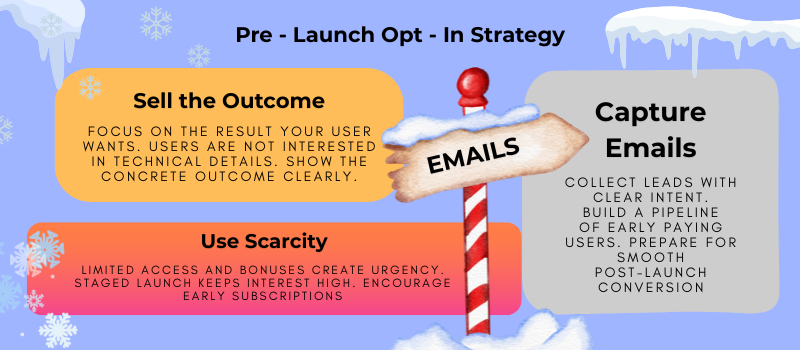
a) Sell the Outcome, not the Product

Users aren’t interested in how your product looks, and they don’t want to delve into technical details. They want a concrete result that solves their problem. To achieve this, describe the end value on your opt-in page, using language your audience can understand without complex technical jargon, and avoid long, dense descriptions that are difficult to understand. Your goal is for the website visitor to immediately understand that the product solves their problem.

b) Use Scarcity and Positioning

You need to understand the unique features of your micro SaaS and showcase them to future customers. You also need to create a sense of scarcity. This can be achieved through limited access, such as limited access to 50 seats at a certain price, with a discount for early adopters. Early adopters can also receive certain bonuses. You can also break the launch into stages, introducing new features to users. This also generates interest in the product. All this creates a sense of value and accelerates the decision to subscribe.

c) Capture Emails with Clear Intent

Don’t assume that quickly creating a pre-launch page will generate subscriptions. The key is to capture the user’s intent to pay. For example, you can inform the user that they will receive early access for $X. You can also collect not only the user’s name and email address, but if this is important to your business, you can also collect information about the user’s company size, their role in the business, and so on. These leads will form the basis of your pre-launch email funnel, with high conversion rates and initial payments expected at the start.

3. Build a Pre-Launch Email Funnel That Warms Users Up

If your product is still in development, that’s not a problem. It’s important to create a pre-launch email funnel now that builds trust, demonstrates the product’s value, and generates user interest.

Set up a consistent email sequence, and you’ll be able to not only talk about the problem and its solution but also highlight progress, feedback, and insights. This will ensure that your first paid users get started immediately after launch, already understanding the functionality of your micro SaaS.

a) Educate Users about the Problem

At this stage, your goal is to convey to your audience the importance of the problem you’re solving. You need to show examples of the difficulties other users are experiencing without your product and why this is critical for their business. If you have case studies, use them to clearly define the scale of the problem. This will create an emotional connection with the user, and such users are more likely to purchase micro SaaS products when they understand the consequences of ignoring the problem.

b) Show Progress and Social Proof

Share stories from early testers, beta results, and feedback. When users see you regularly displaying such content, it means your micro SaaS is gradually moving toward launch. Audiences feel like they’re participating in something exclusive when they see social proof. People enjoy the feeling of being part of the process at the same time. It’s almost a sign of willingness to pay for the product upon launch.

c) Pre-Sell Before the Product is Finished

You don’t need to wait until your product is fully ready to start monetizing. Offer early access, exclusive terms, and a discount to subscribers of your pre-launch marketing funnel as soon as possible. This way, you’ll quickly build a core of paying users, receive your first revenue, and validate real demand before investing more time into development. If you’re still shaping your idea, positioning, and first-user strategy, follow the AI SaaS Roadmap: From Idea to First Users in 30 Days Without Heavy Coding. It outlines a practical path from validation to your first paying customers without heavy technical complexity. The value and limited nature of your early offer are exactly what you need to emphasize. When people see clear benefits and defined limits, they’re far more likely to act immediately instead of postponing the decision.

4. Launch with a Clear Offer, Not Just a Product

When you launch a SaaS product, as we’ve already learned, people are buying a solution to their problem. Therefore, it’s important to formulate a clear offer. Users should understand what they’re getting, why it’s better than other options, and why it’s worth starting now.

Especially during the initial stage of recruiting the first 10-50 paying users, it’s important to give them a sense of exclusivity and a simple path to success.

a) Limited-Time Pricing for Early Adopters

Don’t be afraid to offer something mega-exclusive. For example, the first 50 users receive a 50% discount for the entire year. People see the obvious benefit and are afraid they might miss out on such a great chance to get your SaaS with such a discount. Always clearly state the expiration date or user limit. This helps convert interest into quick action.

b) Remove Friction from Onboarding and Payment

Make the launch process as simple and transparent as possible. Minimize the number of steps, such as enabling popular payment methods like PayPal or Stripe, and allowing users to use the product without complicated registration or verification. These are all important factors, as any obstacle of this kind reduces conversion. Even a minor complication can reduce customer acquisition by half. To do this, ask your colleagues and friends if they encounter any barriers on the site, and you’ll get excellent feedback on what needs to be eliminated to ensure everything runs smoothly.

c) Personally Onboard Your First Users

There are some SaaS projects where every user is truly cared for. You can do this at the initial stage, for example, by holding a demo session of your product or configuring it together with the user. This way, you’ll get even more user feedback, which will allow you to implement improvements. This works wonders, as your first customers are the ones who provide reviews of your product on other websites, which is crucial for your business. Also, ask them for reviews and post them on your website.

5. Use Direct Outreach to Get Your First 50 Paid Users

At the launch stage of your product, there’s no point in waiting for users to accidentally discover it. Directly reaching your target audience is the fastest way to attract paying customers.

Your goal here is not just to talk about your product, but to demonstrate how it solves a specific problem right now.

If you have a micro SaaS that would be useful to online companies, then even if you reach 500 online companies and only 10% become paying users, you’ll already have 50 consistently paying users every month.

Therefore, don’t delay this method of attracting paying users. This will allow you to quickly receive your first payments and validate your product. You’ll also establish personal contact with users and collect valuable feedback to improve your product.

a) Cold Emails with a Problem – First Approach

Cold emails should never be about product promotion. First, highlight a problem your prospect has likely already encountered and demonstrate how your micro SaaS solution can help them solve it. This works because each of us responds to a real, personal pain point, not to yet another out-of-the-box service. To be even more convincing, use specific figures or examples from your experience. This also plays a role whenengaging with the user.

b) Leverage Your Waitlist and Early Signups

Create a sense of urgency in your waitlist for your users. This will increase conversion and attract more paying users. They’re already interested, but they need a little nudge to make a quick decision—that is, to pay. Offering some kind of exclusive access or bonus will further strengthen your offer.

c) Turn Conversations into Paid Trials

Once you’ve successfully established a dialogue with your user, it’s important to offer value through a paid trial. Here, you need to demonstrate the product in action and motivate users to pay without leaving any room for doubt. You can offer a short paid trial instead of a free period. Many perceive this as an indicator of the product’s credibility. For example, an offer that allows users to try all product features for 7 days for $1. The key here is not to engage in dialogue for the sake of dialogue, but to clearly lead users to a paid trial by demonstrating the product’s value and alleviating any doubts.

6. Turn Early Users Into Proof and Growth Assets

Don’t ignore the growth phase at the initial stage of launching your micro SaaS project. Your asset is when 10-50 paying users are already solving a real problem, and it’s important to capture this evidence now.

Don’t try to generate huge amounts of traffic right away. It should be highly targeted to gain a special degree of trust from users and social proof of the need for your product.

Try to focus on extracting maximum value from existing users. Even a few successful case studies can significantly increase conversion rates on your landing page and in sales. Your task is to quickly transform the initial results into clear and compelling stories.

a) Collect Testimonials and Quick Wins

If you already have 10-50 paid users, some of them will quickly experience positive results when interacting with your product. It’s important to capture this moment. Reach out to your users after a while and ask them to leave a review. Even a 3-4 sentence format works better than a long text in the early stages. Use real customer feedback, screenshots, and real numbers. Typically, the more positive case studies you have, the faster new users will start subscribing to your product. In any case, it’s minimal effort with maximum impact.

b) Create Simple Case Studies Fast

Case studies don’t have to be complex or detailed. A simple structure is sufficient: problem → solution → result. Even one specific use case can demonstrate the product’s value better than any marketing text. Publish such case studies on your website, for example, as articles on your blog, in your newsletter, or use them in personal messages. The sooner you start collecting them, the easier it will be to scale. At this stage, quantity and relevance are more important than perfect presentation.

c) Use Referrals and Founder Credibility

f you connect with a couple of founders of SaaS brands or even mid-sized companies whose names are household names, people will be more likely to buy your product. This is a recommendation from the brand’s founder, not just some guy from the streets.

7. Systemize What Works to Reach 50 Paid Users

Once you understand where your first paying customers are coming from, it’s time to systematize. Scaling isn’t about adding new channels, but rather strengthening what’s already producing results.

Many SaaS projects make the mistake of spreading their efforts too thin. Instead, it’s important to solidify your workflows and eliminate any unnecessary clutter.

The goal of this stage is to create a repeatable system for attracting and activating users. This is what will allow you to consistently reach the 50 paying customer mark.

a) Double Down on the Best Acquisition Channel

Don’t spread your attention too thin across a ton of different traffic sources. Simply find one channel that brings you more targeted traffic than the rest. This could be social media or cold emails, for example. Focus on improving it while simultaneously searching for new traffic sources. In the early stages, focus is more important than scale. Then, gradually increase traffic volume and improve conversion.

b) Automate Onboarding and Email Sequences

Manual onboarding works well at the start, but then you need to automate key stages. Welcome emails, prompts, and follow-ups save time and increase activation. It’s important for users to quickly understand the value of your product without your intervention. A simple email series can significantly increase retention. We’re not talking about complex funnels here, but rather a basic structure and sequence of actions. The less friction, the higher the chance of payment.

c) Avoid Premature Scaling Mistakes

One of the most common mistakes is launching ads or scaling a team too early. If the product isn’t yet stable and the funnel isn’t polished, scaling will only exacerbate the problems. Before you reach 50 paying users, it’s crucial to remain flexible and close to the user. Repeatable results come first, then growth. A solid foundation is always more important than quick numbers. Patience at this stage pays off many times over.

Final Thoughts

Reaching 10–50 paying users isn’t a matter of luck, but the result of the right sequence of actions. At this stage, the most technologically advanced products win, but rather those that best understand their users. Focus, speed, and consistency are key. Use early results as an asset, strengthen existing channels, and take your time scaling. This approach lays the foundation for further growth in a SaaS business.

How to Set Up Freemius Payments

How to Set Up Freemius Payments for Your AI Micro-Saas Project

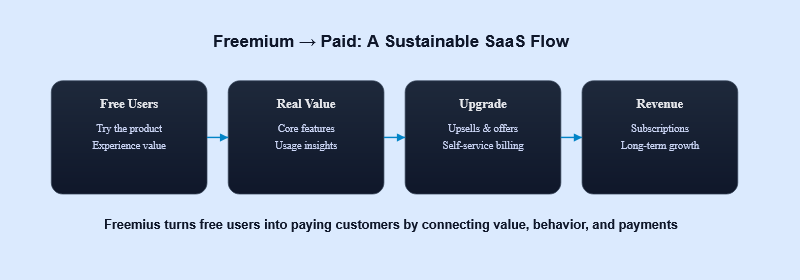
The freemium model is a common monetization approach for micro SaaS products, where users start with free access to limited features and pay to unlock advanced functionality.

People rarely commit to paying for software they haven’t experienced. Giving users the ability to explore a product before spending money significantly reduces friction and makes adoption easier.

For SaaS businesses, the freemium model works especially well because it allows users to see real, practical value in action. Once the product proves its usefulness in day-to-day scenarios, upgrading to a paid plan becomes a natural next step rather than a forced decision.

That said, freemium is not just a pricing tactic — it’s a system. Without a clear understanding of how it should be implemented across your product, payments, and growth infrastructure, it’s almost impossible to build predictable and sustainable revenue. Poor execution often leads to large numbers of free users with little to no monetization.

This is where Freemius comes in. It’s a platform designed to help SaaS founders implement freemium and paid models correctly, without turning monetization into a technical or operational burden. In this article, we’ll look at how Freemius works and which marketing capabilities it provides to support growth.

1. Turning Free Users into Paying Customers

a) Subscriptions, Licensing, and Payments in One System

Freemius provides an all-in-one infrastructure for handling subscriptions, license management, payments, taxes, marketing automation, and analytics for digital products, including SaaS. It allows you to manage free and paid access from a single dashboard, without building complex custom solutions.

The platform takes care of subscription billing, payment processing, tax compliance, and security by default. On top of that, it offers a wide range of built-in features that simplify monetization. Instead of stitching together multiple tools, you get a unified system that lets you focus on product and growth rather than payment logic.

b) Designed for Conversion, Not Just User Acquisition

Freemius is built with one core objective in mind: converting free users into paying customers. Every marketing feature inside the platform supports this goal.

Tools such as behavioral analytics, in-product upsells, discount campaigns, and automated triggers are designed to nudge users toward upgrading at the right moment. The self-service user portal allows customers to upgrade plans, manage licenses, and update payment details on their own — reducing friction, improving retention, and lowering support overhead.

Beyond surface-level growth metrics, Freemius helps you understand how users interact with your product, identify blockers in the payment journey, and increase customer lifetime value. The focus is not on collecting free sign-ups, but on building a monetization engine that scales with your SaaS.

2. Planning Pricing Tiers and Paid Features

Pricing drives growth in every SaaS business. Founders need to decide not only how much to charge, but also which features belong in free access and which ones create real incentive to upgrade.

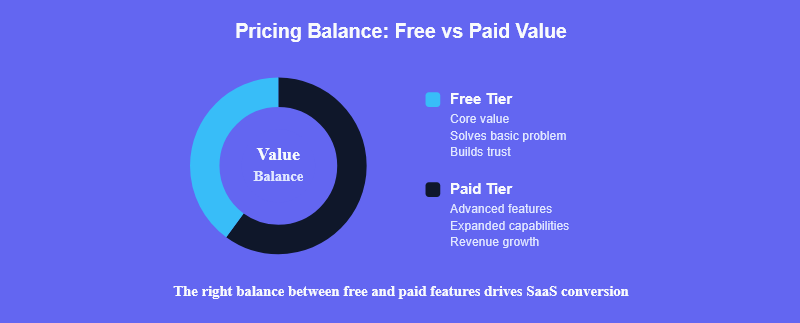
Users should experience value before they see a paywall. When people understand what your product does and how it helps them, moving to a paid tier feels natural. A well-designed pricing model increases the chances that free users turn into paying customers instead of staying stuck on the entry level.

a) Structuring Free and Paid Access

Imagine a micro-SaaS that solves one clear problem. The free plan lets users achieve a meaningful result and understand the product’s core benefit. At the same time, it clearly shows that more advanced capabilities exist in the paid version.

This balance matters. You want users to succeed with the free tier, but you don’t want to give away everything. Freemius helps manage this boundary. It allows founders to define plans and feature sets with precision, enabling or disabling functionality per tier. This approach keeps the free plan useful while protecting premium value.

b) How Pricing Structure Affects Conversion

Pricing structure directly influences upgrade behavior. When the free plan includes too many features, users see no reason to pay. When it offers too little, users fail to understand the product’s real value and leave.

The strongest conversion happens when the free tier solves a simple, narrow use case, while paid plans unlock broader capabilities and efficiency gains. Freemius supports this strategy with tools such as time-limited trials, feature-based plan configuration, and automated upgrade flows.

These mechanisms help founders observe how users interact with pricing, identify upgrade triggers, and present paid options at the right moment. Instead of forcing upgrades, the system guides users toward higher-value plans as their needs grow.

3. How Freemius Strengthens Your Marketing Funnel and Freemium Conversion

After you solve the technical side of payments, the real work begins. You need to guide users through a clear and efficient marketing funnel—from their first interaction with your product to the moment they decide to pay.

In SaaS, marketing doesn’t stop at ads or landing pages. Monetization plays a direct role in how users move through the funnel. Pricing logic, upgrade timing, and in-product messaging all influence conversion.

Monetization tools like Freemius work best when they’re part of a broader SaaS strategy — one that starts long before payments, with idea validation, positioning, onboarding, and a clear path to your first users.

If you want to see how all these elements connect into a single, structured process, this AI SaaS Roadmap: From Idea to First Users in 30 Days Without Heavy Coding walks through the full journey step by step.

Freemius helps founders shape flexible and personalized conversion paths without heavy engineering. You can test ideas, react to user behavior, and improve monetization without rebuilding your product.

a) Automated Messaging and Purchase Triggers

When a user shows exit intent, Freemius can display a targeted message instead of letting them leave silently. This small intervention often shifts hesitation into action and keeps the user engaged.

Freemius also supports discounts, upsells, and other purchase incentives that work together as part of a single system. Each message responds to user behavior, not guesswork. You create timely nudges that feel relevant instead of aggressive, which improves conversion without harming trust.

b) Marketing Integrations and Behavior Insights

Freemius connects with external marketing and analytics platforms to extend your funnel beyond the product itself. You can send data about user actions, trials, upgrades, and cancellations directly into your CRM or analytics stack through webhooks or built-in integrations.

This setup gives founders a clear view of where users slow down or drop out. You see which stages of the funnel need better value communication and which actions trigger upgrades. With data and automation working together, you build a marketing system that supports long-term growth instead of one-off campaigns.

4. Using Freemius Analytics to Drive Growth and Increase Customer Lifetime Value

Sustainable SaaS growth doesn’t happen by accident. Setting up payments alone won’t create predictable revenue. Founders need visibility into how users behave and what motivates them to stay, upgrade, or leave.

Freemius gives you direct access to these insights. The platform shows live performance metrics and lets you compare user segments so you can make informed growth decisions for your micro-SaaS. This approach matters even more when your business relies on subscriptions and ongoing engagement.

a) Metrics That Matter for Growth and LTV

Running a micro-SaaS means tracking the right numbers. Metrics like monthly recurring revenue (MRR), churn rate, average revenue per user (ARPU), and customer lifetime value (LTV) shape every strategic decision.

Freemius displays these metrics in real time inside the dashboard. You can quickly identify which plans generate the most value and which features need refinement. By exploring the data, founders understand which users stay longest, which segments drive revenue, and where additional engagement can improve retention.

b) User Segmentation and Cohort Analysis

Cohort analysis groups users by shared characteristics such as acquisition source, plan type, or signup period. Tracking these groups over time reveals patterns that individual metrics can’t show.

With Freemius, you create cohorts automatically and monitor their behavior without exporting data or building complex spreadsheets. This visibility helps founders pinpoint when churn spikes, which features push users to upgrade, and which customer groups deliver the highest long-term value.

5. User Retention and Churn Reduction with Freemius

User acquisition is only part of the success of the freemium model. It’s also important to retain paying customers, increase their lifetime value (LTV), and thus generate the core profit of your micro SaaS.

Freemius provides a complete set of tools for subscription management, user behavior analysis, and developing strategies aimed at reducing churn and increasing repeat sales.

a) Working with Subscription Renewals and Reminders

One of the reasons paid subscriptions are cancelled is unintentional cancellations of renewals. Users may forget about license renewal deadlines, misunderstand the value of upgrades, or simply hesitate over their decision. There are factors that reduce passive cancellation and make subscription renewal a natural continuation of product use. This is achieved by Freemius sending reminders about the upcoming subscription expiration. The service also notifies users of renewal benefits, such as updates, security, and support. Users can also renew their subscription without entering payment information.

b) Segmentation of Users by Behavior and Status

Not all users behave the same when interacting with the service. The service collects data on license type, frequency of updates and interactions with the product, user activity, and customer lifecycle stage. Based on this data, you can send personalized information to different segments, offer upgrades to those users who are ready to purchase, and immediately identify users at high risk of churn. This segmentation increases marketing effectiveness.

c) Win-back Strategies for Returning lost Customers

A churn isn’t always a permanent loss. Freemius provides data that helps you understand at what point a user terminated their paid subscription, which plan was a barrier, and how much time has passed since the churn. Once you have this information, you can launch win-back campaigns, such as personalized discount offers, access to new features, or temporary trial periods for paid plans. This way, you can increase your overall LTV and regain some of your lost users without spending money on acquiring new traffic.

6. Scaling Sales and Automating Monetization with Freemius

Once the freemium model has proven its effectiveness, the primary objective now becomes scaling. Freemius allows you to automate key monetization processes, reduce operating costs, and focus on product improvement rather than payment management.

a) Automation of Payments, Taxes and Licensing

Selling digital products globally can pose various financial and legal challenges. Freemius can not only process payments but also calculate and pay taxes, manage licenses and access, and issue invoices and refunds. This is especially important if your business team is small and you don’t need to build your own billing infrastructure.

b) A/B Testing of Prices and Offers

The optimal price isn’t a guess, but the result of experimentation. Freemius can test different pricing plans, monthly and annual subscriptions, bundles and upsells, and special offers for new and existing users. You can analyze conversion and revenue for each option and gradually increase ARPU (Average Revenue per User) and find the most profitable monetization models.

c) Entering the Global Market and Localizing Sales

Freemius is focused on international sales. The platform supports local payment methods, trusted checkout pages, multi-currency payments, and adaptations for different regions and markets. Developers can scale globally without having to create separate payment solutions for each country.

7. Common Mistakes When Working with Freemius and How to Avoid Them

The service provides a powerful monetization infrastructure, but developers must also know how to properly use the tools provided.

Many projects fail to realize the potential of the freemium model due to common mistakes in pricing, communication, and data management.

In practice, many of these mistakes don’t originate at the monetization stage. They usually start much earlier — when the initial SaaS idea hasn’t been clearly defined or properly validated.

If you want to begin at the very start and learn how to find and vet strong micro SaaS ideas, you can begin with Day 1 — Where to Find Great SaaS Ideas (and how to vet them).

Understanding these mistakes allows you to accelerate growth and avoid lost revenue in the initial stages of a project’s launch.

a) Generous Free Version Without Upgrade Motivation

Providing users with too much functionality in the free version of your product is a big mistake. If users perceive that they’ve received too much value, they’ll be less inclined to upgrade to a paid plan. The best approach is to ensure that the free version doesn’t address key use cases but merely demonstrates value. Paid features are a logical extension of product use. Functionality limitations shouldn’t feel like an artificial barrier. Users should see this as a natural part of their growth. Freemius allows you to track where users are stuck on the free plan and haven’t yet reached a paid plan. This is a valuable feature that will allow you to properly adjust your product growth strategy.

b) Ignoring Analytics and User Behavior

Many developers use Freemius solely as a payment tool without analyzing the data. As a result, decisions are made based on intuition rather than facts. Common problems include ignoring churn rate and LTV data, misunderstanding what influences conversion, and a lack of analysis of payment abandonment points. Regularly working with Freemius analytics, however, allows you to adjust pricing, improve onboarding, and increase overall monetization efficiency.

c) Lack of Interaction with Users After Installation

You need to constantly communicate with users so that after installing the free version of your micro SaaS, they understand the benefits of the paid version. To do this, use email notifications and in-app messages. Also, explain the value of paid features using case studies, and guide users from the first launch to the upgrade. You build all of this systemically together with the Freemius service.

Final Thoughts

The freemium model alone doesn’t guarantee success. True success lies in building the right funnel and consciously designing each stage.

If you’re a WordPress plugin developer or a micro SaaS company, Freemius becomes more than just a payment solution, but a full-fledged growth platform. This is because it allows you to convert free users into paying customers, helps you build the right marketing funnel, increases conversion, and performs a host of other essential tasks.

When you use its tools strategically, you can build a sustainable business model where product, marketing, and monetization work seamlessly.

If you plan to scale a freemium product or increase revenue without overcomplicating your infrastructure, Freemius is one of the most powerful online platforms for achieving these goals.

ai-saas-platform-vs-micro-saas

AI SaaS Platform vs Micro-SaaS: How to Build, Scale and Monetize Your Product Successfully

The AI SaaS Platform approach has fundamentally changed how software products are built. Many of these platforms embed AI-driven functionality, allowing applications to handle tasks traditionally associated with human support, such as responding to user queries in real time.

Today, you can create micro SaaS products that solve specific user problems in as little as one week — without deep technical expertise. An AI-powered SaaS product can now be built even without programming skills.

In recent years, no-code tools and AI-driven solutions have emerged, allowing virtually anyone to launch a micro SaaS business and start generating revenue.

In this article, you’ll learn the key differences between AI SaaS platforms and micro SaaS products. You’ll also discover how to build, scale, and monetize a product, and how to turn an idea into a profitable business.

Whether you’re a beginner or an experienced startup founder, this guide will help you navigate the world of AI driven micro SaaS products.

1. What is the AI SaaS Platform and How Everything Works

a) Definition of an AI SaaS Platform

An AI SaaS platform is a cloud-based software solution that uses AI to automate tasks, analyze data, or improve user experience. These platforms operate on a subscription model and require no installation. Users access the platform through a browser and pay a monthly fee to use the service. AI SaaS can solve complex business problems and specific issues within the context of micro-SaaS.

b) Core Components of an AI SaaS Platform

The days of building software entirely from scratch are largely behind us. Today, many components are available through ready-made services and integrations. As a result, assembling an AI SaaS product can take just a few days. A typical AI SaaS platform consists of several core components: an AI model or API (such as machine learning or NLP), cloud infrastructure, a backend that handles business logic, a frontend user interface, and a subscription and billing system.

c) How AI SaaS Platforms Work in Practice

Some of the mechanisms within your micro SaaS may be complex, but from the user’s perspective, everything appears simple. They enter data or requests, the AI processes the information, and the platform returns the result in real time. The user sees it, receives value, and then uses the product.

d) Why AI SaaS Platforms Are Popular for Startups

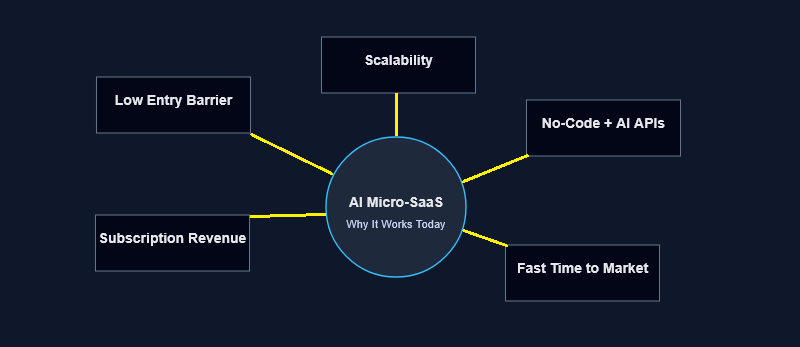
More and more newcomers are choosing to build AI powered micro-SaaS rather than large, complex platforms. This is because it offers a low entry barrier, the ability to scale quickly, and the ability to generate monthly profits.

This is exactly why many founders start not with a complex platform, but with a focused micro-SaaS idea that can be validated quickly. If you want to see how this process works step by step in practice, you can start with the first free lesson, which shows where to find strong SaaS ideas and how to validate them before building anything.

2. Micro SaaS: Small Product, Big Potential

Micro SaaS is a marketing-focused product. It solves a single problem for a specific audience.

Instead of trying to capture a huge market share, these SaaS solutions focus on one thing and offer a single, measurable value.

Due to the product’s simplicity and clear positioning, micro SaaS attracts its first customers faster.

Very low development and promotion costs allow for rapid profitability. As a result, micro SaaS becomes a rapidly growing business.

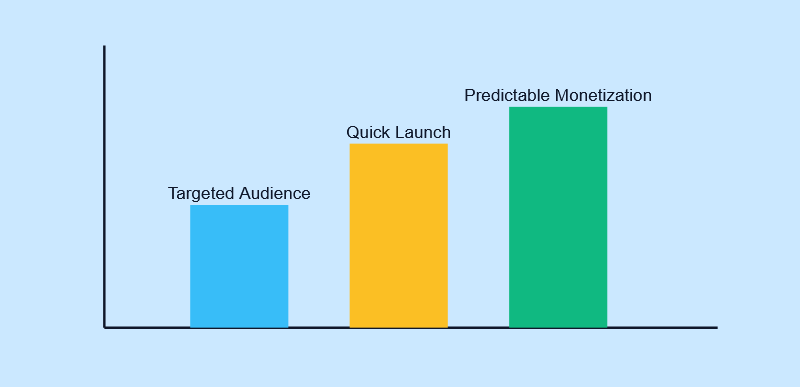
a) Focused Problem, Targeted Audience

Micro SaaS that’s focused on success starts with a narrow market segment and a specific user scenario. This focus simplifies marketing messages, reduces customer acquisition costs, and increases conversion. If your product aligns with what the customer wants and solves a clear pain point, it quickly becomes a must-have niche tool.

b) Quick Launch and early Demand Validation

Micro SaaS allows you to test your idea without large-scale investments in marketing and development. Minimal functionality simplifies market entry and allows you to test demand through a website, early access, and paid subscriptions. This means, with minimal risk, you can further scale only those solutions that have proven successful.

c) Predictable Monetization and Sustainable Growth

Micro SaaS is based on a marketing model with clear value and transparent pricing. Models such as subscription and freemium are easily understood and don’t require complex sales. Due to its high LTV and low operating costs, micro SaaS can grow steadily even with a small but targeted customer base.

3. AI SaaS vs Micro-SaaS: Key Differences You Should Know

The choice between AI SaaS and Micro SaaS directly impacts product strategy, marketing, and growth model. While both approaches can utilize AI, their scaling requirements differ. Business logic can also sometimes differ.

AI SaaS is often focused on a broader market and a more complex technical model. Micro SaaS focuses on a clear offer and niche.

The differences between them may be subtle, including in user expectations and user acquisition budgets.

a) Market Scale and Product Positioning

AI-based SaaS typically solves complex user or business problems. This requires universal positioning and significant investments in brand and trust. Micro SaaS focuses on a narrow niche where the product is easily visible and can quickly become a leader through deep specialization.

b) Marketing Complexity and Cost of Acquisition

Micro SaaS wins over AI SaaS because everything is much simpler. The message is simple, the path to purchase is short, and the CAC (Customer Acquisition Cost) is low. AI SaaS is a bit more complex, with a longer decision making cycle and more complex marketing.

c) Monetization, Growth and Operational Risks

AI SaaS typically requires investment in the model and team, which can increase financial risks in the early stages of launch. Micro SaaS offers more predictable monetization and reaches profitability much faster, maintains flexibility, and grows organically. You retain control of the business.

4. How to Build a Micro-SaaS Without Coding

Building a micro SaaS project without coding knowledge in the modern internet world is a viable strategy, and it works wonders.

You don’t even need modern paid no-code tools. You just need ChatGPT, and it will quickly give you everything you need to turn your idea into a working product and test market demand. This will allow you to accelerate the launch of your micro SaaS project and minimize financial risks.

Instead of spending months developing code, the founder can focus on marketing, value, and user feedback. For a micro SaaS project, speed and product accessibility are more important than a complex technical architecture.

a) Using No-Code Tools

There are plenty of AI platforms and no-code builders online that will help you build a functional product without writing code. However, it’s better to avoid spending money on them and instead use ChatGPT, which also handles all complex coding tasks perfectly. It can create the interface, logic, and integrations for you. This speeds up your time to market and allows you to test your micro SaaS from different angles, checking everything in real time and without significant delays.

b) Validation and Marketing First, Scaling Later

The No-Code approach allows you to validate your product’s value in just a couple of days, and your website and early access help you determine whether your audience is interested in the product before complex development. After receiving your first sales, you can gradually strengthen the technical side or bring in developers based on existing demand.

5. Validating Your Idea Before You Build

Before developing your product, make sure the market has a problem and that there’s a willingness to pay for its solution. This validation of your idea will help you avoid wasting time and resources.

If you see demand early, you’ll be able to focus on the right audience and value proposition.

This stage also forms the basis for future marketing and product positioning. The sooner you receive a positive response from the market, the higher your chances of a successful launch.

a) Identify the Real Problem and Target Audience

Start with a specific pain point for a specific group of online users. Ask them how they currently solve the problem and why they’re dissatisfied with existing solutions. Understanding your audience’s thinking clearly helps you craft your offer and increase the likelihood of a response.

b) Test Demand Before Product Development

You can measure interest using websites, early access forms, or even incredibly simple MVPs. Even a small number of registrations is a powerful signal of interest in your product. This approach allows you to make decisions based on data, not assumptions.

c) Users’ Willingness to Pay

If you want complete validation, it’s important to see that users confirm this with their willingness to pay for the solution. Pre-orders, early subscriptions, and price tests help determine how critical the problem is for the audience. Willingness to pay for a solution is the best indicator of the viability of a micro SaaS solution.

6. Monetization Strategies for Your Micro-SaaS

Choosing the right monetization strategy directly impacts the sustainability and growth of micro SaaS. You need to align pricing with the true value your product provides to the user.

Micro SaaS benefits from simple and transparent models that are understandable to virtually everyone.

Flexible monetization will help you test your product and adapt to the market. The sooner you see an influx of revenue, the faster you’ll confirm your product’s viability.

a) Subscription with Clear Value

Thanks to the expected revenue, the subscription model for micro SaaS remains popular to this day. When users see clear pricing based on usage volume, they quickly understand what they want to pay for. The key is tying the price to the outcome, not to the feature set.

b) Freemium and Trial Period

Freemium or a free trial period speeds up the acquisition of the first wave of users. This model works perfectly for niche products, where value is immediately apparent after a short period of use. It’s important to consider early on what limitations will encourage users to upgrade, rather than devalue the product.

c) Usage-Based and One-Time Payments

One-time payments work for highly specialized solutions with a clear outturn. If you have micro SaaS with variable value, such as tools with automation or AI solutions, then a pay-per-use model is better. These two models allow for flexible adaptation to different user segments and increase overall LTV.

7. Scaling Your Micro-SaaS Without Overcomplicating Things

Sustainable growth of your micro SaaS is built on maintaining focus and eliminating unnecessary clutter. This is where simplicity comes in: the fewer dependencies and manual operations, the easier it is to scale. The key is to increase value for users, not the number of features.

This approach will allow you to grow predictably and without losing control of your business.

a) Scale what’s already Working

Strengthen your existing core product before expanding to other markets. Improving the key user experience often yields greater results than expanding functionality. Scaling should be based on data: retention, LTV, and real growth points.

b) Automation Instead of Team Expansion

The great news is that a single founder is enough to run a successful micro SaaS business. They can scale everything not by hiring employees but through automation. Support, billing, onboarding, and marketing are automated with minimal overhead. This maintains business flexibility and reduces costs at all stages.

c) Controlled Growth Without Unnecessary Complexity

Not every growth is beneficial. Even if you have a strong influx of customers at the start, without a ready-made infrastructure, this can be detrimental to the start of your business. Only focusing on gradual scaling will yield long-term benefits. Clear analytics, a minimal stack, and simple processes allow you to grow without overloading your business.

Final Thoughts

Creating an AI SaaS product doesn’t necessarily require a complex infrastructure. A micro SaaS approach reduces risks and launches the product faster. You’ll be able to deliver a single, tangible value to users.

A clear 30-day roadmap, outlined in AI SaaS Roadmap: From Idea to First Users in 30 Days Without Heavy Coding, helps transform an idea into a working product and acquire your first users — all without protracted development or heavy coding

Validation before development saves time and money by allowing you to build a product based on demand, not user demand. No-code tools, on the other hand, give you access to creating micro SaaS products even without coding knowledge.

Simple monetization methods make your business sustainable from the first few months. Scaling a micro SaaS product doesn’t require complexities—focus and automation often yield better results than expanding a team. This approach maintains control over the product and growth strategy. AI enhances micro SaaS  without becoming an end in itself.

By starting small, you create a solid foundation for future scaling. As a result, AI micro SaaS becomes not an experiment, but a conscious and sustainable business mode