

The AI SaaS Platform approach has fundamentally changed how software products are built. Many of these platforms embed AI-driven functionality, allowing applications to handle tasks traditionally associated with human support, such as responding to user queries in real time.
Today, you can create micro SaaS products that solve specific user problems in as little as one week — without deep technical expertise. An AI-powered SaaS product can now be built even without programming skills.
In recent years, no-code tools and AI-driven solutions have emerged, allowing virtually anyone to launch a micro SaaS business and start generating revenue.
In this article, you’ll learn the key differences between AI SaaS platforms and micro SaaS products. You’ll also discover how to build, scale, and monetize a product, and how to turn an idea into a profitable business.
Whether you’re a beginner or an experienced startup founder, this guide will help you navigate the world of AI driven micro SaaS products.
1. What is the AI SaaS Platform and How Everything Works
a) Definition of an AI SaaS Platform
An AI SaaS platform is a cloud-based software solution that uses AI to automate tasks, analyze data, or improve user experience. These platforms operate on a subscription model and require no installation. Users access the platform through a browser and pay a monthly fee to use the service. AI SaaS can solve complex business problems and specific issues within the context of micro-SaaS.
b) Core Components of an AI SaaS Platform
The days of building software entirely from scratch are largely behind us. Today, many components are available through ready-made services and integrations. As a result, assembling an AI SaaS product can take just a few days. A typical AI SaaS platform consists of several core components: an AI model or API (such as machine learning or NLP), cloud infrastructure, a backend that handles business logic, a frontend user interface, and a subscription and billing system.
c) How AI SaaS Platforms Work in Practice
Some of the mechanisms within your micro SaaS may be complex, but from the user’s perspective, everything appears simple. They enter data or requests, the AI processes the information, and the platform returns the result in real time. The user sees it, receives value, and then uses the product.
d) Why AI SaaS Platforms Are Popular for Startups
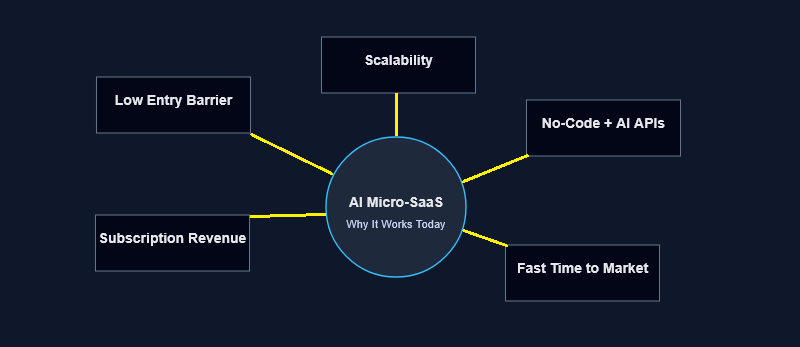
More and more newcomers are choosing to build AI powered micro-SaaS rather than large, complex platforms. This is because it offers a low entry barrier, the ability to scale quickly, and the ability to generate monthly profits.
This is exactly why many founders start not with a complex platform, but with a focused micro-SaaS idea that can be validated quickly. If you want to see how this process works step by step in practice, you can start with the first free lesson, which shows where to find strong SaaS ideas and how to validate them before building anything.
2. Micro SaaS: Small Product, Big Potential
Micro SaaS is a marketing-focused product. It solves a single problem for a specific audience.
Instead of trying to capture a huge market share, these SaaS solutions focus on one thing and offer a single, measurable value.
Due to the product’s simplicity and clear positioning, micro SaaS attracts its first customers faster.
Very low development and promotion costs allow for rapid profitability. As a result, micro SaaS becomes a rapidly growing business.
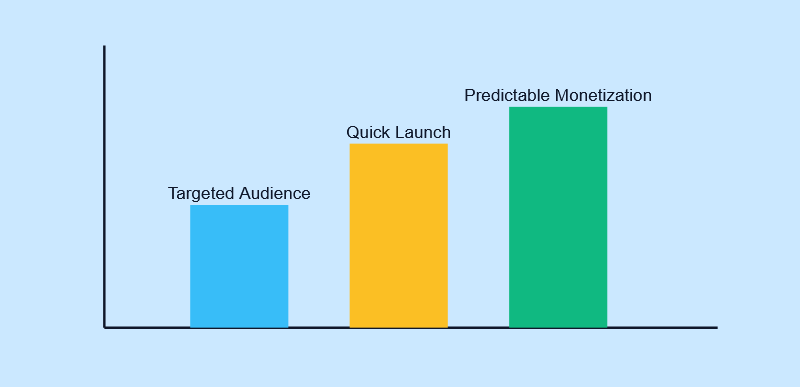
a) Focused Problem, Targeted Audience
Micro SaaS that’s focused on success starts with a narrow market segment and a specific user scenario. This focus simplifies marketing messages, reduces customer acquisition costs, and increases conversion. If your product aligns with what the customer wants and solves a clear pain point, it quickly becomes a must-have niche tool.
b) Quick Launch and early Demand Validation
Micro SaaS allows you to test your idea without large-scale investments in marketing and development. Minimal functionality simplifies market entry and allows you to test demand through a website, early access, and paid subscriptions. This means, with minimal risk, you can further scale only those solutions that have proven successful.
c) Predictable Monetization and Sustainable Growth
Micro SaaS is based on a marketing model with clear value and transparent pricing. Models such as subscription and freemium are easily understood and don’t require complex sales. Due to its high LTV and low operating costs, micro SaaS can grow steadily even with a small but targeted customer base.
3. AI SaaS vs Micro-SaaS: Key Differences You Should Know
The choice between AI SaaS and Micro SaaS directly impacts product strategy, marketing, and growth model. While both approaches can utilize AI, their scaling requirements differ. Business logic can also sometimes differ.
AI SaaS is often focused on a broader market and a more complex technical model. Micro SaaS focuses on a clear offer and niche.
The differences between them may be subtle, including in user expectations and user acquisition budgets.
a) Market Scale and Product Positioning
AI-based SaaS typically solves complex user or business problems. This requires universal positioning and significant investments in brand and trust. Micro SaaS focuses on a narrow niche where the product is easily visible and can quickly become a leader through deep specialization.
b) Marketing Complexity and Cost of Acquisition
Micro SaaS wins over AI SaaS because everything is much simpler. The message is simple, the path to purchase is short, and the CAC (Customer Acquisition Cost) is low. AI SaaS is a bit more complex, with a longer decision making cycle and more complex marketing.
c) Monetization, Growth and Operational Risks
AI SaaS typically requires investment in the model and team, which can increase financial risks in the early stages of launch. Micro SaaS offers more predictable monetization and reaches profitability much faster, maintains flexibility, and grows organically. You retain control of the business.
4. How to Build a Micro-SaaS Without Coding
Building a micro SaaS project without coding knowledge in the modern internet world is a viable strategy, and it works wonders.
You don’t even need modern paid no-code tools. You just need ChatGPT, and it will quickly give you everything you need to turn your idea into a working product and test market demand. This will allow you to accelerate the launch of your micro SaaS project and minimize financial risks.
Instead of spending months developing code, the founder can focus on marketing, value, and user feedback. For a micro SaaS project, speed and product accessibility are more important than a complex technical architecture.
a) Using No-Code Tools
There are plenty of AI platforms and no-code builders online that will help you build a functional product without writing code. However, it’s better to avoid spending money on them and instead use ChatGPT, which also handles all complex coding tasks perfectly. It can create the interface, logic, and integrations for you. This speeds up your time to market and allows you to test your micro SaaS from different angles, checking everything in real time and without significant delays.
b) Validation and Marketing First, Scaling Later
The No-Code approach allows you to validate your product’s value in just a couple of days, and your website and early access help you determine whether your audience is interested in the product before complex development. After receiving your first sales, you can gradually strengthen the technical side or bring in developers based on existing demand.
5. Validating Your Idea Before You Build
Before developing your product, make sure the market has a problem and that there’s a willingness to pay for its solution. This validation of your idea will help you avoid wasting time and resources.
If you see demand early, you’ll be able to focus on the right audience and value proposition.
This stage also forms the basis for future marketing and product positioning. The sooner you receive a positive response from the market, the higher your chances of a successful launch.
a) Identify the Real Problem and Target Audience
Start with a specific pain point for a specific group of online users. Ask them how they currently solve the problem and why they’re dissatisfied with existing solutions. Understanding your audience’s thinking clearly helps you craft your offer and increase the likelihood of a response.
b) Test Demand Before Product Development
You can measure interest using websites, early access forms, or even incredibly simple MVPs. Even a small number of registrations is a powerful signal of interest in your product. This approach allows you to make decisions based on data, not assumptions.
c) Users’ Willingness to Pay
If you want complete validation, it’s important to see that users confirm this with their willingness to pay for the solution. Pre-orders, early subscriptions, and price tests help determine how critical the problem is for the audience. Willingness to pay for a solution is the best indicator of the viability of a micro SaaS solution.
6. Monetization Strategies for Your Micro-SaaS
Choosing the right monetization strategy directly impacts the sustainability and growth of micro SaaS. You need to align pricing with the true value your product provides to the user.
Micro SaaS benefits from simple and transparent models that are understandable to virtually everyone.
Flexible monetization will help you test your product and adapt to the market. The sooner you see an influx of revenue, the faster you’ll confirm your product’s viability.
a) Subscription with Clear Value
Thanks to the expected revenue, the subscription model for micro SaaS remains popular to this day. When users see clear pricing based on usage volume, they quickly understand what they want to pay for. The key is tying the price to the outcome, not to the feature set.
b) Freemium and Trial Period
Freemium or a free trial period speeds up the acquisition of the first wave of users. This model works perfectly for niche products, where value is immediately apparent after a short period of use. It’s important to consider early on what limitations will encourage users to upgrade, rather than devalue the product.
c) Usage-Based and One-Time Payments
One-time payments work for highly specialized solutions with a clear outturn. If you have micro SaaS with variable value, such as tools with automation or AI solutions, then a pay-per-use model is better. These two models allow for flexible adaptation to different user segments and increase overall LTV.
7. Scaling Your Micro-SaaS Without Overcomplicating Things
Sustainable growth of your micro SaaS is built on maintaining focus and eliminating unnecessary clutter. This is where simplicity comes in: the fewer dependencies and manual operations, the easier it is to scale. The key is to increase value for users, not the number of features.
This approach will allow you to grow predictably and without losing control of your business.
a) Scale what’s already Working
Strengthen your existing core product before expanding to other markets. Improving the key user experience often yields greater results than expanding functionality. Scaling should be based on data: retention, LTV, and real growth points.
b) Automation Instead of Team Expansion
The great news is that a single founder is enough to run a successful micro SaaS business. They can scale everything not by hiring employees but through automation. Support, billing, onboarding, and marketing are automated with minimal overhead. This maintains business flexibility and reduces costs at all stages.
c) Controlled Growth Without Unnecessary Complexity
Not every growth is beneficial. Even if you have a strong influx of customers at the start, without a ready-made infrastructure, this can be detrimental to the start of your business. Only focusing on gradual scaling will yield long-term benefits. Clear analytics, a minimal stack, and simple processes allow you to grow without overloading your business.
Final Thoughts
Creating an AI SaaS product doesn’t necessarily require a complex infrastructure. A micro SaaS approach reduces risks and launches the product faster. You’ll be able to deliver a single, tangible value to users.
A clear 30-day roadmap, outlined in AI SaaS Roadmap: From Idea to First Users in 30 Days Without Heavy Coding, helps transform an idea into a working product and acquire your first users — all without protracted development or heavy coding
Validation before development saves time and money by allowing you to build a product based on demand, not user demand. No-code tools, on the other hand, give you access to creating micro SaaS products even without coding knowledge.
Simple monetization methods make your business sustainable from the first few months. Scaling a micro SaaS product doesn’t require complexities—focus and automation often yield better results than expanding a team. This approach maintains control over the product and growth strategy. AI enhances micro SaaS without becoming an end in itself.
By starting small, you create a solid foundation for future scaling. As a result, AI micro SaaS becomes not an experiment, but a conscious and sustainable business mode
Add a Comment